How to Stop the Cycle of Hormonal Acne with Cycle Syncing
Written By Seanna Cohen
Seanna Cohen is a certified Skin Care Therapist and founder of the Clean Beauty School, an online destination to learn skincare tips & tricks, shop the best clean beauty products, and get personalized advice.
As a trusted skincare expert, she inspires others to take a holistic approach to beauty and find sustainable practices through her skincare coaching, webinars, and classes.
PMS symptoms including monthly breakouts are common, but not normal.
As women we’ve come to accept PMS symptoms - bloating, cramping, extreme mood swings and acne as normal, but in fact it’s our body’s way of telling us something is out of balance. If you suffer from consistent breakouts each month, whether you experience one painful pimple or many, the first step to preventing them is to understand your menstrual cycle.
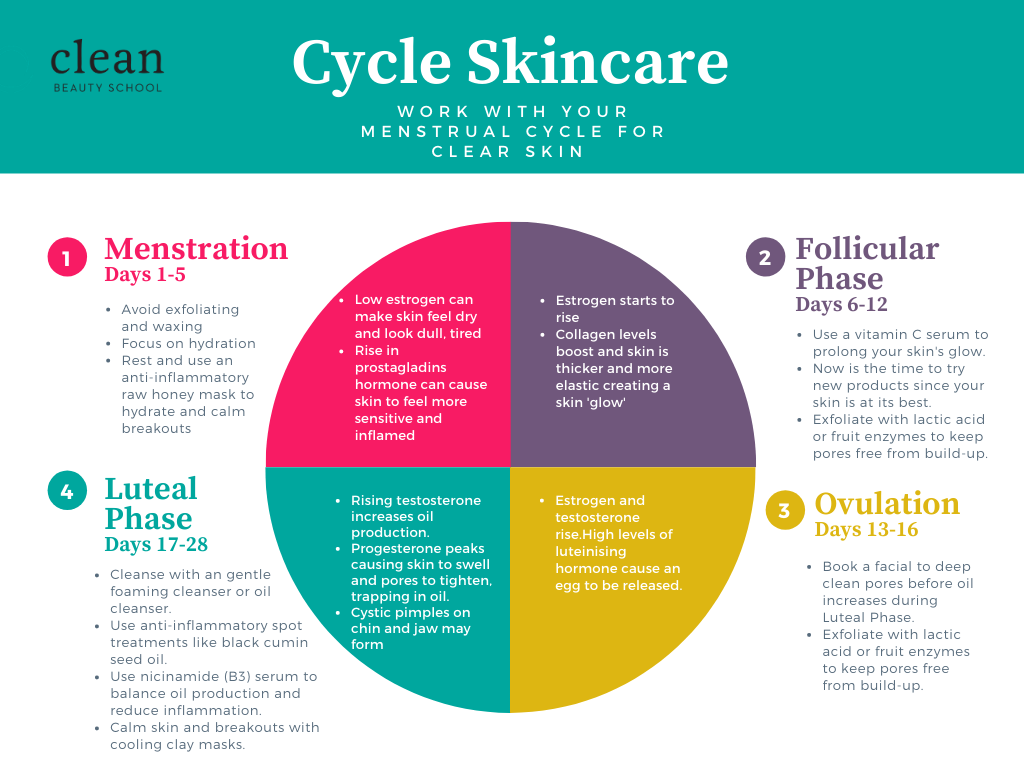
It took me over 30 years to understand what was happening with my cycle but when I did, it blew my mind! There are four phases in a woman's menstrual cycle and hormone levels rise and fall depending on the phase. If you pay attention to when you break out, you'll probably notice that it happens around the third week of the month, also known as the Luteal Phase. During this phase, progesterone makes skin swell, pores get tight, and oil production increases. Follow these 3 steps to stop the cycle of hormonal acne and get to the root cause.
1. The first step to stopping hormonal acne is to track your menstrual cycle
Start by downloading a cycle tracking app. There are so many free apps available that will help you track your monthly cycle and all of its symptoms. Two of my favourite cycle tracking apps are: FLO App and CLUE. It’s important to consistently track your cycle symptoms for at least 2-3 months so that you can start to see patterns.
2. Get to know the four phases of your menstrual cycle and start making small changes to your skincare routine, based on each phase. (The following ranges are an estimation, based on a 28 day cycle).
Menstruation (Days 1-6): “Moisturize and nourish”
Low estrogen and progesterone can make skin feel dry and look dull or tired. A rise in the prostaglandins hormone can cause the skin to feel more sensitive and inflamed.
During this phase:
Avoid exfoliating and waxing
Focus on hydration
Use an anti-inflammatory raw honey mask to hydrate and calm any existing breakouts
Rest and take time for yourself
Follicular Phase (Days 6-12): “Maintain and stimulate”
Estrogen starts to rise, collagen levels boost, skin is thicker and more elastic which creates a natural 'glow'.
During this phase:
Use a vitamin C serum to prolong your skin's glow
Try new products during this phase since your skin is at its best
Exfoliate with lactic acid or fruit enzymes to keep pores free from build-up
Ovulation (Days 13-16): “Prevention”
Estrogen, testosterone rise, and high levels of luteinising hormone cause an egg to be released.
During this phase:
Book a facial to deep clean pores before oil increases during the Luteal Phase
Exfoliate with lactic acid or fruit enzymes to keep pores free from build-up
Luteal Phase (Days 17-28): “Calm inflammation and control oil”
Progesterone peaks which causes skin to swell and pores to tighten. An imbalance of testosterone can increase oil production, which gets trapped in tight pores, causing pimples to form.
During this phase:
Cleanse with a gentle foaming cleanser or oil cleanser
Use anti-inflammatory spot treatments like black cumin seed oil
Use niacinamide (B3) serum to balance oil production and reduce inflammation
Calm skin and breakouts with cooling clay masks
3. Seek a naturopathic doctor to further explore internal issues like hormonal imbalance
Switching up your skincare throughout the month is an effective way to help counteract potential breakouts and side effects, but you may need some help supporting your body back to hormonal health, such as speaking with a naturopathic doctor. By tracking your cycle and knowing your symptoms, you’re taking the first step to stop the cycle of hormonal acne and finally feel in control again!

For extra reading on cycle syncing and hormonal imbalance, check out the following resources: